Wednesday, February 15, 2017

Security Flaws That Make Smartphones Vulnerable To Hacking

Most smartphone users store a lot of sensitive data in their devices such as their personal, contact, and banking details. As people become more dependent on these gadgets, they tend to forget that these can be easily hacked. The iCloud hack that exposed the private photos of famous celebrities from a few years back is proof that people should take their personal cybersecurity seriously.

Image source: Huffingtonpost.com
A smartphone possesses features that most users are unaware of. Gyroscopes and accelerometers are some of the factors that make smartphones smart but can also be easily hacked. To simplify, a gyroscope is a sensor for detecting the phone’s orientation. While it is helpful in maximizing the use of apps, it can also detect sound waves. This makes it easier for hackers to get into a person’s phone and steal information without being discovered.

On the other hand, accelerometers can also be compromised with sound waves. By registering a fake motion signal, hackers can break into a device and take control of it. When this part has been compromised, hackers will be able to see the movement of the phone making it easy to steal passwords and other important information. Accelerometers can also be found in medical devices, vehicles, and even satellites, making these devices vulnerable to hacking.

Image source: DIgitaltrends.com
As more studies about the vulnerabilities of smartphones and devices are being released, companies like Google and Apple are doing their best to ensure the security of their users. Cybersecurity companies are also taking steps to bring their services to individuals, especially in this highly-connected world.

Adam Quirk is an award-winning criminal justice professional with 15 years of experience in investigations, regulatory compliance, team leadership and supervision, program initiation, and development. Find out more about his company, Stealth Advise, on this page.
/

Tuesday, January 10, 2017

Separating Myth From Fact In Crime Fiction

Legal dramas, police procedurals, and detective stories revolving around criminal cases tell stories of tragedy and mystery that for many audience members ring close to reality, or so it would seem on the surface. It is thus shocking (though unsurprising) for many a layperson that many of the things that they see on television aren’t always inaccurate to how real investigations and legal proceedings take place in real life.

Image source: huffingtonpost.com

Much of what is shown in criminal investigations in television outside of documentaries are the product of artistic liberties taken by showrunners, skipping over valuable fieldwork and shortening procedures to fit the episodic nature of the program.

Indeed, of all the works of artistic license shown in television shows featuring criminal investigations, the most egregious of all inaccuracies is the timespan of processing evidence. Rarely in real life are cases resolved in a matter of days, and many of the forensic tests shown would take weeks or months at the least. Actual investigations can take years.

Likewise, not all forensic evidence translates into an ironclad case. DNA evidence and fingerprinting, though invaluable to many cases, do not always prove the guilt or innocence of suspects or, for that matter, are applicable to all crimes. Of course, not all crimes would need something as thorough as evidence gathering.

Image source: criminaljusticedegreesguide.com

Criminals do not always make the same mistakes committed by their television counterparts. Ironically, criminals often attempt to try to hide their misdeeds based on what they see on television, to varying degrees of success. And although many criminals are eventually caught by other mistakes, they are usually of a fundamentally different sort from the ones in a crime drama.

Detectives in fiction also seem to have much more clout than their real-life counterparts such as making arrests and examining forensic evidence directly.

An investigator himself, Adam Quirk enjoys his share of both crime fiction and the works of influential criminologists. Visit this LinkedIn page for more on him and his work.

Thursday, December 15, 2016

False prophesying: The downfall of Ted Kaczynski

Ted Kaczynski's was a cold case that took 18 years to solve. During that time, the country was gripped by the story of the radical ideologist who had persistently wanted the world to understand his forewarnings. His bold statements were made on letter bombs that victimized civilians associated with universities and airports, earning him the moniker "Unabomber." By 1982, as Ted's bombs became more destructive, he became a national threat.

Image source: dailymail.co.uk


Ted Kaczynski was a child prodigy recognized by the academe but was at the same time alienated by peers because he was "different." By age 16, he was admitted to Harvard on full scholarship. Some say that Ted had honed many of his ideologies during his stay at the university, which during the 1950s was immersed in a culture of existentialist despair. This had possibly developed Ted's bipartite take on humanism and science. Students would study Joseph Conrad, one of Ted's favorite writers, who created a satire about bomb-wielding anarchists against science, something that would become exactly Ted's character.

Image source: people.com


Ted had made very public pronouncements, calling the industrial revolution a disaster for the human race and technology an instrument in the creation of a sick society that impedes human potential. The manifesto that was published at theThe New York Times led investigators to Ted's whereabouts. He was finally arrested in 1996, and was sentenced to life imprisonment.

Adam Quirk is a criminal justice professional and a licensed private investigator who has worked with the DEA and FBI. Learn more about his careerhere.

Tuesday, December 13, 2016

Creative Heists: Famous Cases Of Art Theft

Image source: Messynessychic.com
An artwork with the signature of a famous artist could be worth millions. Usually housed in museums, these masterpieces are monitored to ensure that they will incur no damage. However, once these works are lost, they are harder to recover due to the prevalence of art forgery. Here are some famous cases of art theft:

1. The Stewart Gardner Museum Heist

In 1990, robbers entered the backdoor in disguises and took all their hands could hold for the next 90 minutes with very little fight required. With works by Manet and Rembrandt and masterpieces from the Shang Dynasty among others, it is estimated that almost $500 million-worth of art pieces has been stolen from the place. Up to this day, some of the frames are still hanging in the museum in hopes that they will be restored one day. This case is considered the biggest art heist in history.

2. Missing Mona Lisa

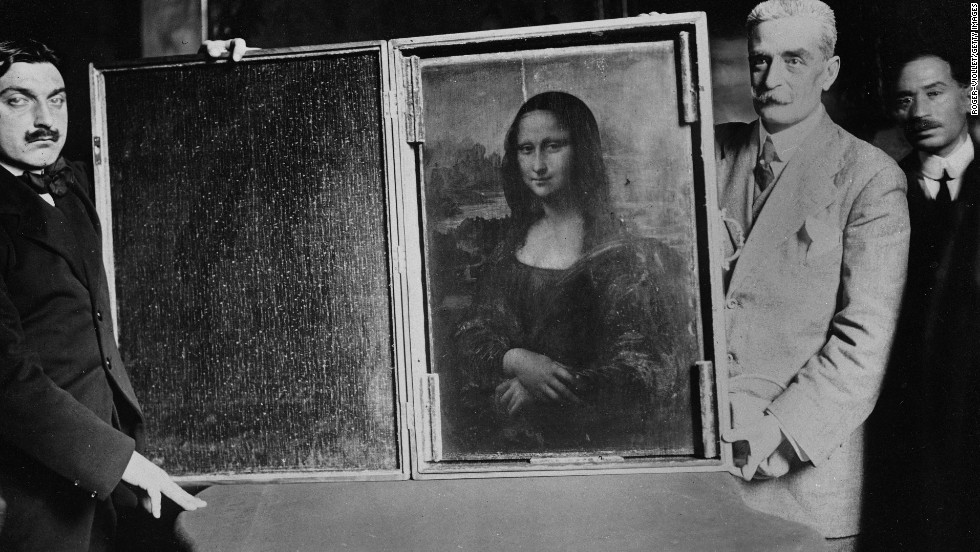
In 1911, Vincenzo Peruggia stole one of the world’s most famous painting—the Mona Lisa. As a former employee of the Louvre, the thief had access to the gallery and successfully stole the prized painting. Unlike other heists, this one had a noble goal. Peruggia believes that the artwork should be displayed in Italy as the country was Da Vinci’s homeland. After a few years of trying to sell the artwork, a potential buyer reported Peruggia to authorities, and the Mona Lisa was restored to its original place at the Louvre.

3. Munch Museum Robbery

Image source: Highsnobiety.com
The Norwegian expressionist Edvard Munch is best known for his work, The Scream. Though half of the four parts has been stolen, a dramatic robbery in 2004 allowed two gunmen to get away with one version of The Scream and another artwork called the Madonna. In 2006, the suspects were caught and the two artworks were returned to the museum with damages.

Stealing a piece of high-culture can be worth millions. Thankfully, museums all over the world have heightened their security measures, especially for prized and iconic pieces.

Adam Quirk has previously worked for the U.S. Drug Enforcement Administration and the Federal Bureau of Investigation, excelling in leading drug diversion and solving violent crimes. Visit this website for more on Adam and his firm, Stealth Advise.


Tuesday, September 13, 2016

The Watch List: Illegal Drugs Of 2016

The National Institute on Drug Abuse is vigilant about informing the public about dangerous drugs that are being sold in the country unlawfully. Here is a list of illegal drugs the public should be aware of:

1. Flakka (alpha-PVP)

Manufactured in China and sold in Florida for around $3 to$5, Flakka is a hazardous alternative to heroin. This drug takes the form of white or brown crystal-like powder originally used in cleaning jewelry, plant food, or device screen cleaner. People usually snort, swallow, smoke, or inject this drug, which can be 10 times stronger than cocaine. It can also cause anxiety, panic attacks, paranoia, delirium, and violent behaviors.

Image source: Gawker.com

2. Fentanyl

Fentanyl is a potent opioid that can come in the form of a harmless pain reliever. However, the rise in drug overdose leading to deaths in many parts in the U.S. has increased as it can be disguised as over-the-counter pain relievers such as Xanax, Norco, and Percocet. The drug can be harmful even when taken in small doses. It is also 25 to 50 times stronger than heroin. The public should stay away from pharmaceutical drugs being sold on the streets.

Image source: Businessinsider.com


3. Caffeine Powder

Used by young professionals and teens, this substance is usually taken to lose weight or stay awake during an all-nighter. However, a teaspoon of this powder is equivalent to 25 cups of coffee. Still unregulated by the FDA, the seizures, vomiting, disorientation, and increased palpitations caused by this substance could have fatal effects on a person.

These drugs are peddled in underground venues to unsuspecting youths. Parents, guardians, and law enforcers should be aware of these illegal substances to prevent the rise of casualties due to drug use.

Adam Quirk has more than 15 years of experience in investigations, regulatory compliance, team leadership and supervision, and program initiation and development. Read more about his expertise here.


Wednesday, August 24, 2016

Former FBI agent convicted of stealing drug money

A former FBI Special Agent was sentenced to three years in prison for stealing more than $136,000 worth of drug money. This Moreno Valley native did not just take money but was also convicted of tampering with a witness and falsifying documents. 

    Image source: mirror.co.uk


Scott M. Bowman pleaded guilty to a count of witness tampering, a count of record falsification, and a count of obstruction of justice. Aside from serving three years in prison, he is also required to pay a total of $136,462 in restitution.

Bowman served at the FBI for 18 years. He was involved in a lot of successful operations, before going corrupt. According to Department of Justice officials, Bowman dishonestly took drug money that was seized in an operation in June and August of 2014. The funds and other documents were transferred to his custody. Bowman admittedly spent the money for his personal enjoyment. He bought cars, opened a checking account amounting to $10,000, and even paid for his wife’s cosmetic surgery with the drug money. 

  Image source: gettyimages.com


Bowman was also found falsifying official FBI reports, submitting a deposit receipt with a forged signature that understates that the drug money was seized.

 Adam Quirk is a seasoned private investigator. He previously worked for the Federal Bureau of Investigation and the U.S. Drug Enforcement Administration. Quirk has handled cases involving robbery, drug diversion, and violent crimes. Learn more about his professional work by visiting this LinkedIn page.

Wednesday, July 13, 2016

The Importance Of Background Screening Prior To Recruitment

Whether in a small or a large company, success lies in the reliability of the workforce. Recruitment, therefore, is a sensitive part of company operations.

http://techsheer.com/wp-content/uploads/2016/01/recruitment-software.jpg
 Image source: Techsheer.com

Many companies employ exhaustive means, apart from examinations and interviews, to evaluate the competence and character of applicants. The pre-hiring background screening has then become a growingly popular adjunct measure. This extra caution assumes that a candidate who looks good on paper might have more dimensions to his or her character. This step is meant to eliminate negligent hiring altogether while ensuring that the company welcomes only those with unimpeachable backgrounds and proven past performance.

https://strategistgroup.files.wordpress.com/2011/08/tm-image1.jpg
 Image source: Recruitingunblog.com

In highly competitive industries where only the fittest and the brightest are given an opportunity, some applicants, out of desperation, end up misrepresenting themselves. To assess the honesty of their potential recruits, the human resources department can hire a private investigator to perform background checks.

Though there are still some companies that find this step extraneous, costly, and intrusive, those that include this step in pre-hiring have discovered that the process has spared them from mismatched hires who eventually became liabilities. Responsible recruitment is a must to preserve a company’s integrity.

Award-winning criminal justice professional Adam Quirk has 15 years of experience in investigations, regulatory compliance, team leadership and supervision, program initiation, and development. Find out more about his company, Stealth Advise, on this page.